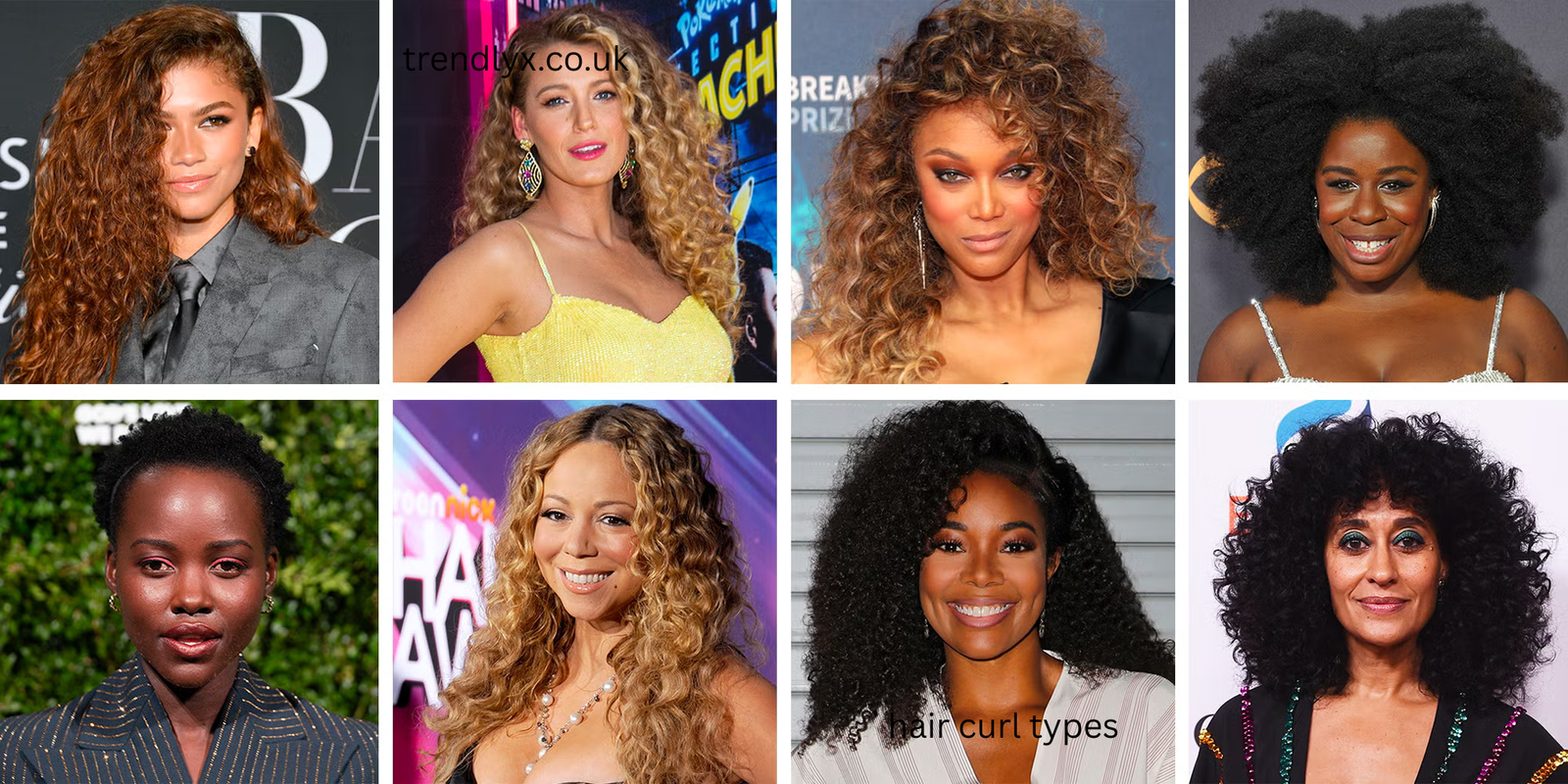
Understanding hair curl types is essential for anyone who wants healthier, more manageable, and beautiful hair. Whether your hair is slightly wavy, tightly coiled, or somewhere in between, knowing your curl pattern helps you choose the right products, styling methods, and care routine. Many people struggle with frizz, dryness, or lack of definition simply because they are not using techniques suited to their natural hair curl types.
The concept of hair curl classification became widely popular through the system created by hairstylist Andre Walker, which organizes hair into categories based on curl shape and texture. Today, this system is commonly used by professionals and individuals alike to better understand hair needs.
In this comprehensive guide, we will explore everything you need to know about curl types, including classifications, characteristics, care routines, product recommendations, styling tips, and common mistakes to avoid.
What Are Hair Curl Types?
curl types refer to the natural pattern your hair forms as it grows from the scalp. This pattern depends primarily on genetics and the shape of your hair follicle. Straight follicles produce straight hair, while oval or curved follicles produce waves, curls, or coils.
curl types are typically divided into four main categories:
- Type 1: Straight hair
- Type 2: Wavy hair
- Type 3: Curly hair
- Type 4: Coily or kinky hair
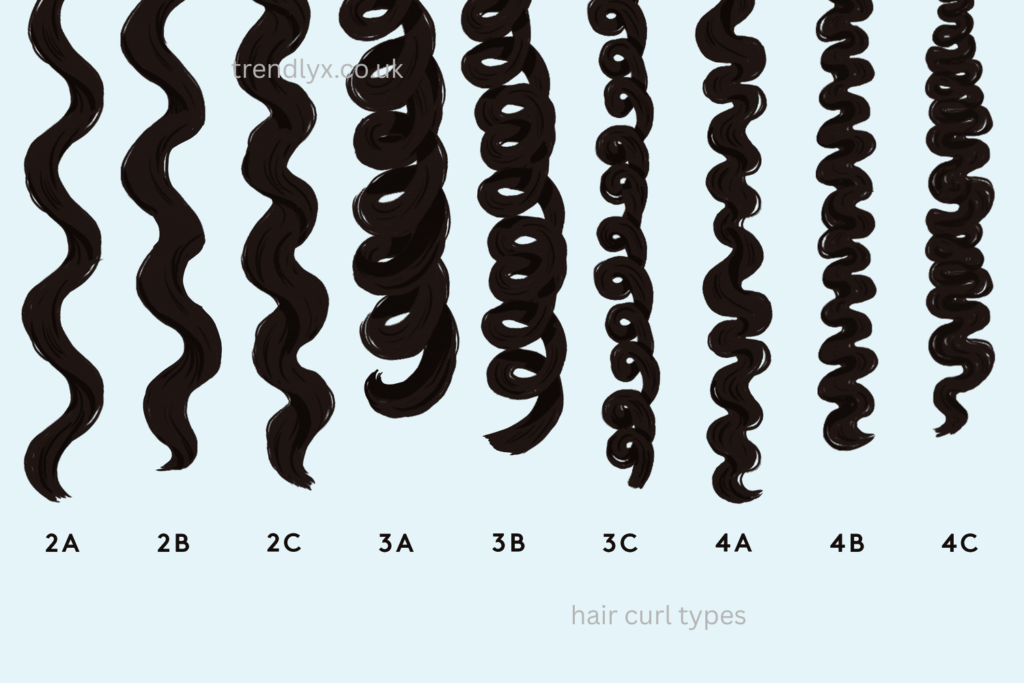
Each category also contains subtypes (A, B, C) that describe the tightness or looseness of the curl pattern.
Understanding your hair curl type is important because it determines:
- Moisture needs
- Styling methods
- Product selection
- Maintenance routine
- Frizz control strategies
Why Understanding Hair Curl Types Matters
Many people use products that are not suited to their curl types, which can lead to problems like dryness, breakage, or limp curls. When you know your curl type, you can:
- Choose effective hair products
- Improve curl definition
- Reduce damage and breakage
- Simplify styling routines
- Maintain healthier hair
Knowing your hair curl type is the foundation of a successful hair care routine.
Type 1 Hair Curl Types: Straight Hair
Although straight hair is not technically “curly,” it is included in the curl classification system.
Characteristics of Type 1 Hair
- No natural curl pattern
- Reflects light easily (often shiny)
- Can become oily quickly
- Usually resistant to curling
Subcategories include:
- 1A: Very fine and flat
- 1B: Slight body with moderate thickness
- 1C: Thick with slight bends
Care Tips for Type 1 Hair Curl Types
- Use lightweight shampoos
- Avoid heavy conditioners
- Add volume with texturizing products
- Wash regularly to control oil buildup
Type 2 Hair Curl Types: Wavy Hair
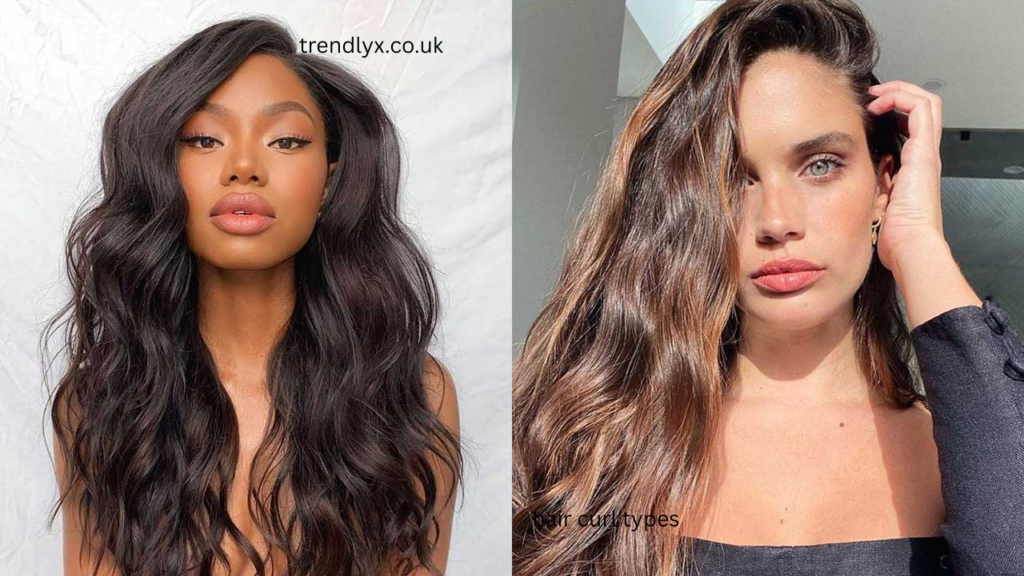
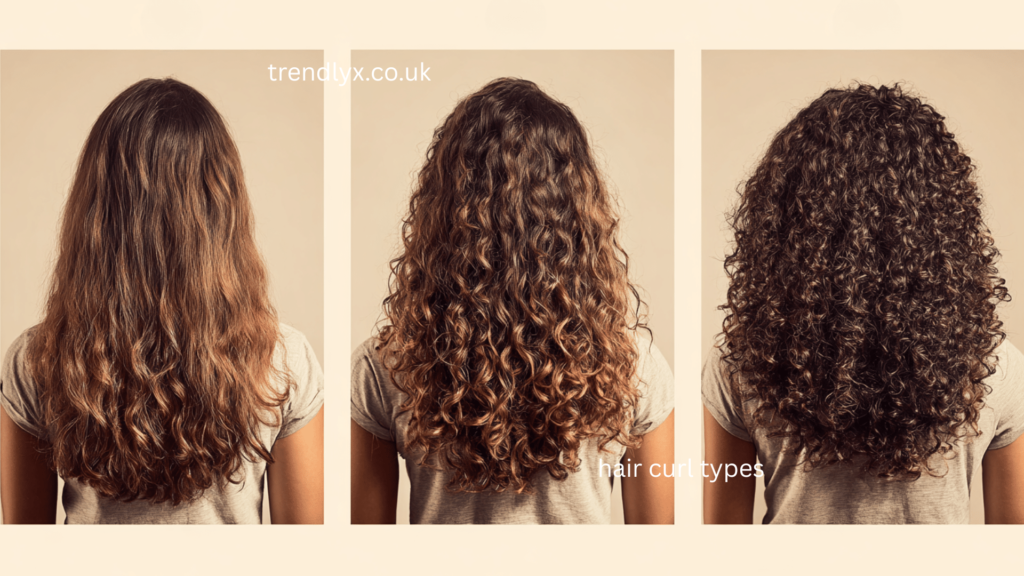
Type 2 curl types form loose S-shaped waves and fall between straight and curly hair.
Characteristics of Type 2 Hair
- Natural wave pattern
- Moderate frizz potential
- Can be styled straight or curly
- Often lacks volume at roots
Subtypes include:
- 2A: Loose waves
- 2B: Defined waves with frizz
- 2C: Strong waves with some curls
Care Routine for Type 2 Hair Curl Types
- Use lightweight curl creams
- Apply mousse for definition
- Avoid heavy oils
- Diffuse or air-dry for best results
Type 3 Hair Curl Types: Curly Hair
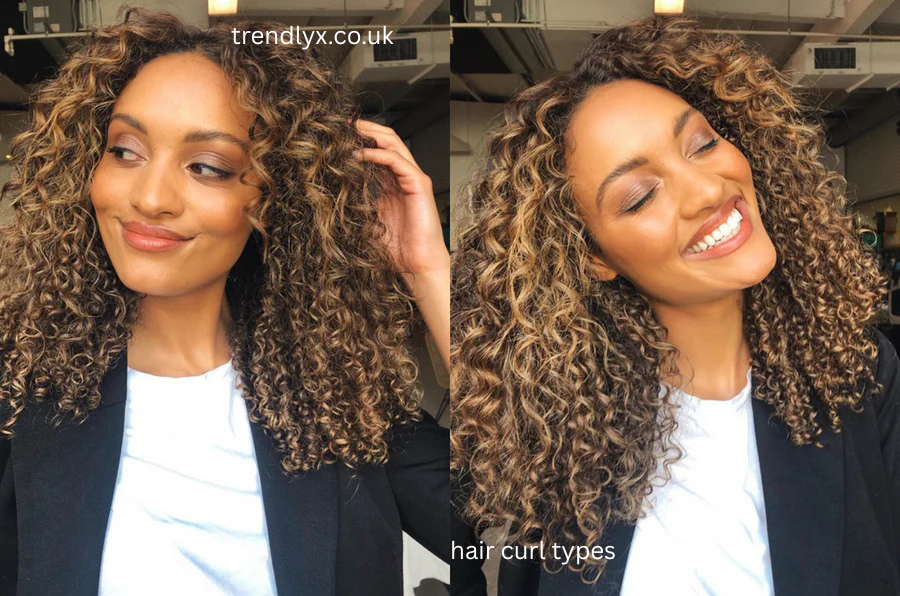
Type 3 curl types include clearly defined curls ranging from loose loops to tight spirals.
Characteristics of Type 3 Hair
- Springy curls
- Prone to dryness
- Volume and bounce
- More frizz than wavy hair
Subcategories include:
- 3A: Loose curls
- 3B: Medium ringlets
- 3C: Tight corkscrew curls
Care Tips for Type 3 Hair Curl Types
- Deep condition regularly
- Use leave-in conditioner
- Avoid brushing dry hair
- Use curl-enhancing products
Proper moisture is essential for maintaining healthy curls in this category.
Type 4 Hair Curl Types: Coily or Kinky Hair
Type 4 curl types have the tightest curl patterns, often forming zig-zag shapes or tiny coils.
Characteristics of Type 4 Hair
- High shrinkage
- Very dry texture
- Fragile strands
- Dense appearance
Subtypes include:
- 4A: Soft coils with visible pattern
- 4B: Z-shaped bends
- 4C: Tightest curls with minimal definition
Care Routine for Type 4 Hair Curl Types
- Frequent deep conditioning
- Heavy moisturizers and oils
- Protective styling
- Gentle detangling
Moisture retention is the biggest challenge for this curl type.
How to Identify Your Hair Curl Types
Determining your hair curl type is simple if you follow these steps:
- Wash your hair with a gentle shampoo.
- Avoid styling products.
- Let hair air-dry naturally.
- Observe the pattern that forms.
Look at:
- Curl size
- Shape
- Tightness
- Volume
Your pattern will reveal your hair curl type.
Hair Curl Types and Porosity
Hair porosity refers to how well your hair absorbs and retains moisture.
Porosity types include:
- Low porosity
- Medium porosity
- High porosity
curl types often correlate with porosity levels. For example, tighter curls usually have higher porosity and need more moisture.
Understanding both curl type and porosity improves hair care results.
Best Products for Different Hair Curl Types
Choosing the right products depends on your curl pattern.
For Wavy Hair
- Lightweight mousse
- Curl sprays
- Volumizing foam
For Curly Hair
- Curl creams
- Leave-in conditioners
- Gel for definition
For Coily Hair
- Butters and oils
- Deep conditioners
- Moisturizing creams
Using the correct products prevents buildup and enhances natural texture.
Styling Techniques for Hair Curl Types
Different styling methods work better for specific curl types.
Scrunching
Ideal for wavy and loose curls.
Finger Coiling
Best for tighter curls needing definition.
Twist-Outs
Common for coily hair types.
Diffusing
Adds volume without disturbing curl pattern.
Experimentation helps find the best styling method for your hair.
Common Mistakes When Caring for Hair Curl Types
Many people damage their curls unintentionally.
Common mistakes include:
- Overwashing hair
- Using harsh shampoos
- Brushing dry curls
- Skipping conditioner
- Using heat excessively
Avoiding these mistakes helps maintain healthy curls.
Hair Curl Types and Climate Effects
Weather significantly affects curl behavior.
Humidity
Causes frizz and expansion.
Dry Air
Leads to brittle curls.
Cold Weather
Reduces moisture retention.
Adjusting your routine based on climate keeps curls manageable year-round.
Hair Curl Types and Haircuts
The right haircut enhances curl shape.
Popular cuts include:
- Layered cuts for volume
- Curly shags
- Tapered cuts
- Rounded afros
- Shoulder-length layers
A stylist experienced with curls is essential for the best results.
Night Care for Hair Curl Types
Protecting curls overnight prevents damage.
Tips include:
- Satin pillowcases
- Silk bonnets
- Loose braids or pineapple method
- Moisturizing before bed
Night care preserves curl definition and reduces breakage.
Hair Curl Types and Hair Health
Healthy curls require consistent care.
Important factors include:
- Balanced diet
- Hydration
- Gentle handling
- Regular trims
- Proper products
Hair health directly impacts curl appearance.
Can Hair Curl Types Change?
Yes, curl types can change due to:
- Hormonal shifts
- Aging
- Heat damage
- Chemical treatments
- Medications
Changes are often gradual but noticeable over time.
Embracing Natural Hair Curl Types
Many people are now embracing their natural curl patterns instead of altering them with heat or chemicals.
Benefits include:
- Healthier hair
- Less maintenance
- Unique appearance
- Cost savings
- Increased confidence
Natural beauty trends continue to encourage curl acceptance.
Hair Curl Types for Men
curl types apply equally to men.
Popular curly styles for men include:
- Curly fades
- Textured crops
- Natural afros
- Tapered curls
- Short coils
Understanding curl type helps men choose flattering styles.
Professional Treatments for Hair Curl Types
Some treatments enhance curl health.
Options include:
- Deep conditioning treatments
- Protein treatments
- Scalp therapy
- Curl-enhancing salon treatments
Professional care can improve damaged curls significantly.
Psychological Confidence and Hair Curl Types
Hair plays an important role in identity and self-esteem.
Embracing natural hair curl types can:
- Improve confidence
- Encourage self-acceptance
- Reduce styling stress
- Enhance personal style
Confidence often grows when people understand and love their natural hair.
Future Trends in Hair Curl Types Care
The hair industry continues evolving with innovations such as:
- Personalized hair care formulas
- AI-based curl analysis tools
- Sustainable hair products
- Heat-free styling methods
- Advanced moisturizing technologies
The future of curl care focuses on customization and hair health.
Conclusion: Understanding Hair Curl Types for Better Hair Care
Understanding hair curl types is the key to achieving healthy, defined, and beautiful hair. Whether your pattern is wavy, curly, or coily, recognizing your natural texture allows you to create a routine that works with your hair instead of against it.
From choosing the right products to selecting the best haircut and styling techniques, knowledge of hair curl types empowers you to make informed decisions. With proper care, patience, and consistency, every curl pattern can look its best.
Your curls are unique — and learning about your hair curl type is the first step toward embracing and enhancing your natural beauty.