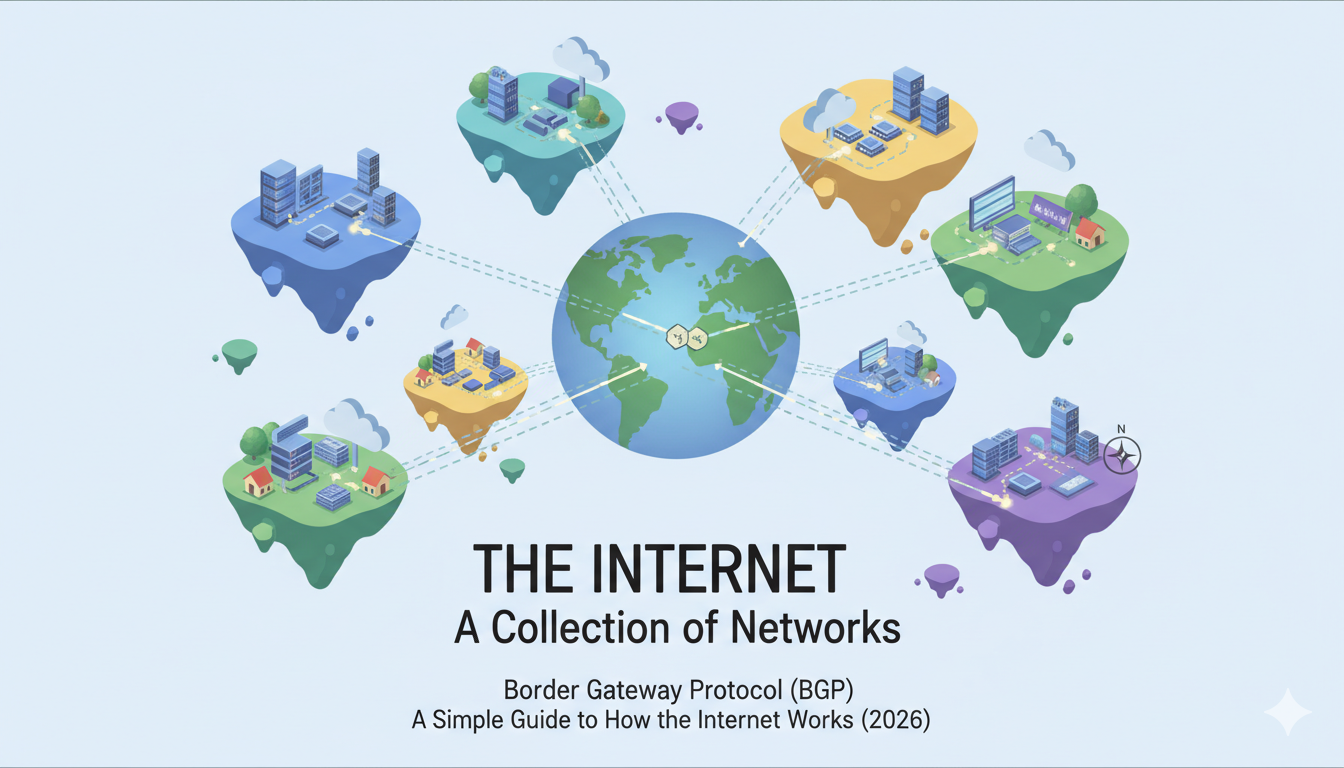
Have you ever wondered how an email travels from London to Tokyo in just a second? It feels like magic, but it is actually because of something called Border Gateway Protocol. Think of the internet not as one big cloud, but as a giant map made of many smaller networks. These networks need a way to talk to each other and find the best paths for data to travel. Without border gateway protocol, your computer wouldn’t know how to find a website hosted in another country. It is the invisible force that keeps our digital world organized and moving fast every single day.
What Exactly is Border Gateway Protocol?
At its heart, border gateway protocol is the language that different parts of the internet use to share directions. Imagine the internet is a massive collection of post offices. Each post office has its own set of addresses it manages. When a letter needs to go to a different city, the post offices must agree on which truck will take it. Border gateway protocol is the set of rules that helps these “post offices” decide the most efficient route. It ensures that your videos, games, and messages take the quickest path possible without getting lost in the vast digital wilderness.
How Autonomous Systems Work Together
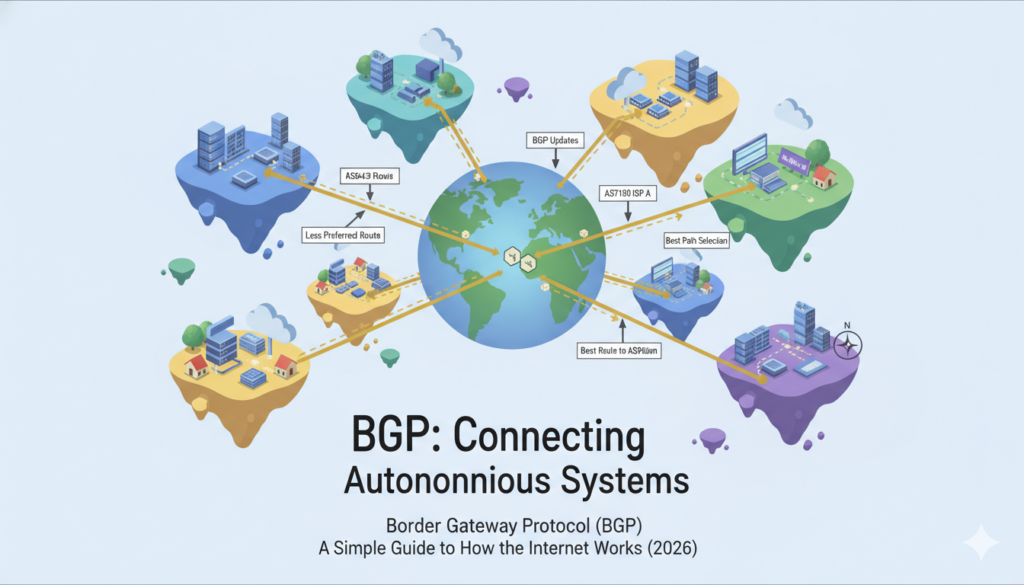
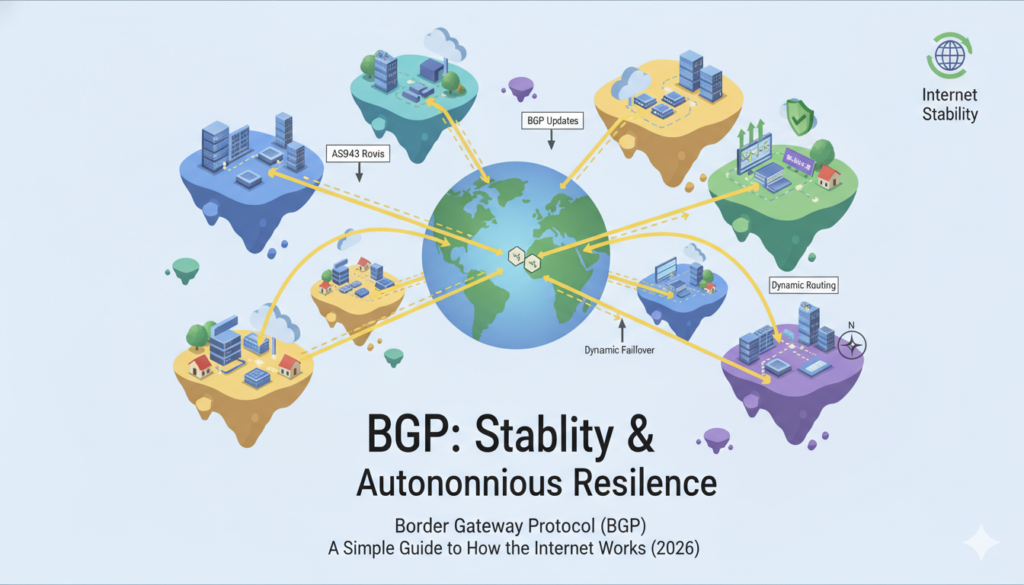
The internet is made up of thousands of smaller networks known as Autonomous Systems, or AS for short. Each major company, like a large internet provider or a tech giant, runs its own AS. To send data between these networks, they use border gateway protocol. It is like a handshake between two different worlds. One network says, “I have these addresses,” and the other says, “Great, I can help you reach them.” This constant sharing of information is what allows the global internet to stay connected as one giant, functional system.
The Role of BGP Routing in Your Daily Life
Every time you click a link, border gateway protocol routing jumps into action behind the scenes. It looks at all the available paths and chooses the best one based on several factors. This isn’t always about the shortest physical distance. Sometimes, a path might be longer but faster because it has less traffic. By using border gateway protocol, the internet can avoid “digital traffic jams.” This makes your browsing experience smooth and reliable, even when millions of other people are online at the same exact time as you.
Why We Call It a Path Vector Protocol
In the world of networking, we describe border gateway protocol as a path vector protocol. This sounds fancy, but it just means it keeps track of the specific path data takes. It records every network “stop” along the way. This is very important because it prevents data from going in circles forever. If the protocol sees its own name on the list of stops, it knows it has already been there and picks a different way. This smart tracking system is a big reason why the internet stays stable and doesn’t crash from simple mistakes.
Understanding External and Internal Connections
There are actually two ways this system works: EBGP and IBGP. External BGP is used when two different companies talk to each other across the globe. Internal BGP is used when a company needs to share routing info inside its own private network. Both versions of border gateway protocol are necessary to make sure data flows correctly from the outside world all the way to your specific device. Whether the data is crossing an ocean or just moving between two rooms in a building, these rules keep everything on the right track.
How BGP Keeps the Internet Fast
Speed is everything when you are trying to stream a movie or join a video call. The border gateway protocol helps maintain this speed by constantly updating its maps. If a major fiber-optic cable under the sea gets damaged, the protocol notices it immediately. It then quickly finds a new route for the data to travel. Because border gateway protocol is always “talking,” the internet can heal itself in real-time. You might not even notice that a problem happened because the rerouting occurs in the blink of an eye.
The Security of Border Gateway Protocol
While it is very smart, this protocol also needs to be very secure. In the past, people could accidentally send the wrong directions, leading to “BGP hijacking.” This is like someone putting up a fake road sign that leads drivers into a dead end. Today, experts use advanced tools to make border gateway protocol more trustworthy. They add digital signatures and locks to ensure that the directions are coming from a real, verified source. Keeping these paths safe is a top priority for every major tech company in 2026.
Comparison of Network Routing Types
| Feature | BGP (Border Gateway Protocol) | OSPF (Interior Protocol) |
| Main Use | Connecting different networks | Connecting devices in one office |
| Speed of Change | Slower but very stable | Very fast for local changes |
| Complexity | High (needs expert setup) | Medium (easier for small teams) |
| Size | Global (the whole internet) | Local (one building or city) |
| Primary Goal | Finding the best policy path | Finding the shortest physical path |
Common Issues and Troubleshooting
Sometimes, the border gateway protocol can run into trouble if a router gets too old or loses power. When this happens, a network might “disappear” from the internet map for a few minutes. Engineers use special monitoring software to watch these connections 24/7. They look for “flapping,” which is when a connection keeps turning on and off rapidly. By managing border gateway protocol carefully, these experts ensure that the websites you love stay accessible around the clock, no matter what technical glitches might occur.
The Future of Global Connectivity
As we move further into 2026, the border gateway protocol continues to evolve. With more people using satellite internet and smart devices, the “map” is getting much bigger. Developers are working on making the protocol even more efficient to handle the massive amount of data we use today. Even though it was invented decades ago, border gateway protocol remains the most important foundation of the modern web. It is a perfect example of how a simple set of rules can manage the most complex machine ever built by humans.
Frequently Asked Questions
1. Can the internet work without BGP?
No, the modern internet would fall apart without border gateway protocol. It is the only system we have that allows thousands of different networks to share routing information on a global scale.
2. Is BGP hard to learn?
It can be complicated for beginners because it has many settings. However, the basic idea of “sharing maps between networks” is easy to understand once you see it as a digital GPS.
3. Does BGP use a lot of power?
The routers that run border gateway protocol are very powerful machines, but the protocol itself is just data. It is an efficient way to make sure electricity and bandwidth are not wasted on bad routes.
4. What is a BGP neighbor?
A “neighbor” is simply another router that your router is talking to. They form a friendship and agree to share all their best internet “shortcuts” with each other constantly.
5. Why is it called a “Gateway” protocol?
It is called a gateway because it sits at the “gate” or the edge of a network. It is the point where your private network meets the rest of the world.
6. Can I run BGP at home?
Most home users do not need it. Your home router uses simpler rules to talk to your internet provider. Only big companies and internet providers usually need to run border gateway protocol.
Conclusion
The border gateway protocol is truly the backbone of our digital lives. It works quietly in the background to ensure that every search, click, and download reaches its destination. By acting as a global GPS, it connects billions of people across every continent. Understanding how this system works gives us a better appreciation for the amazing technology we use every day. If you found this guide helpful, feel free to share it or look into how your own internet provider helps keep the world connected through smart routing!