Have you ever lost touch with a great friend from school or an old neighbor? It happens to the best of us. Life gets busy, people move away, and phone numbers change. Finding someone used to mean digging through a massive paper phone book or asking around town. Today, it is much faster. You can use a True People Search tool online to track down old buddies in just a few clicks. These smart search engines comb through public records, social media links, and online directories to help you reconnect. It feels a bit like magic, but it is just clever data organization. Whether you want to say hello to a childhood pal or verify the owner of an unfamiliar phone number ringing your cell, these platforms make the process simple. However, with great digital power comes a bit of responsibility. You want to make sure you use these tools safely while protecting your own digital footprint. Let us dive into how these search tools work, why people use them, and how you can stay smart while searching the web.
What Is a True People Search?
A true people search is a special kind of online lookup tool. It gathers public information from all over the internet and puts it into one easy report. When you type a name, phone number, or home address into the search box, the system goes to work. It checks public records like property deeds, court filings, marriage licenses, and phone directories. Instead of making you visit ten different government websites, it shows you the results on one clean page. Think of it as a super-powered digital filing cabinet. People use these platforms every day to find old classmates, check up on a new business partner, or see who lives down the street. It is designed to save you time and effort when you need answers fast. The best part is that you do not need any special computer skills to use one. You just type what you know, hit enter, and read the summary.
Why People Use Public Record Finders
People turn to a true people search for many different everyday reasons. Imagine you are planning a big high school reunion. You have the names of fifty classmates from twenty years ago, but no current contact info. Running a quick lookup helps you find current cities, emails, or phone numbers so you can send out invitations. Another common reason is dealing with mystery phone calls or text messages. If an unknown number keeps calling your phone during dinner, a reverse phone lookup tells you who might be on the other end of the line before you call back. Business owners also use these tools to vet new contractors or verify basic background details before signing a big contract. It gives people peace of mind in a busy world. Knowing who you are talking to online helps you avoid scams and keeps your family safe from sneaky digital tricksters.

How Search Engines Gather Public Data
Curious about where all this information comes from? A True People Search does not hack into secret government files or private diaries. Everything it shows you is already sitting out in the open public domain. Government offices, local courts, and city halls are required by law to keep records of property sales, business licenses, and voter registrations. Tech companies write automated computer programs that copy these public files and store them in massive databases. When you run a query, the search engine scans its database for matches. If your old soccer coach bought a house in Ohio last year, that property purchase gets logged in public county records. The search tool simply connects the dots between the name and the address. It is basically a giant digital scrapbook made from paperwork that local governments already published for anyone to see.
Tips for Finding Old Friends Online
Tracking down an old friend with a true people search takes a little bit of strategy. If you search for “John Smith,” you might get ten thousand results across the country. That will not help you much! To get better results, add extra details you remember. Include the city where they used to live, their middle name, or an old employer. If you know their approximate age or a family member’s name, toss that into the mix too. Narrowing down the details helps the search engine filter out the wrong people and zero in on your actual friend. Once you find a likely match, cross-reference the details with social media sites to make sure it is the right person before you send a message. A polite, friendly opening note works best when saying hello after all these years. Keep it light, share a fun memory, and let them reply at their own comfort level.
Checking Unknown Phone Numbers Safely
Getting spam calls can drive anyone crazy. A true people search offers a handy feature called reverse number lookup to deal with this headache. Instead of typing a name, you type the ten-digit phone number into the search bar. The system searches public registry lists to see if that number belongs to a local business, a government office, or an individual. If a local plumbing company calls you while you are at work, the lookup tool will show the company name so you know who it was. If the number comes up as a private mobile phone with no public listing, you will know to ignore it next time. This saves you from wasting time answering robocalls or suspicious sales pitches. Just remember that some mobile numbers change hands often, so the data might not always be completely up to date.
Understanding the Limits of Search Tools
While a true people search is very helpful, it is not perfect. Sometimes the information inside the database is old or incorrect. People move to new states, buy new phones, or change their last names when they get married. If a local county office has not updated its online files this month, the search engine will still show the old data. Also, many people choose to opt out of these public directories. If someone values their privacy, they can ask data brokers to remove their personal listings from public view. When that happens, your search might turn up completely empty even though the person exists. It pays to keep your expectations realistic. Treat the search results as a helpful clue rather than absolute 100 percent proof, and always double-check important details through direct contact.
How to Protect Your Own Privacy Online
Using a true people search is fun, but you probably want your own information to stay private, right? You do not want random strangers reading your home address or phone history. The good news is that you can take control of your digital footprint. Most major data collection websites have an opt-out page hidden near the bottom of their homepage. You can visit these pages, fill out a quick removal form, and verify your identity with an email confirmation. Within a few days, your personal public record profile disappears from their public search results. It is also smart to review your privacy settings on social media accounts. Limit what strangers can see by locking down your friends list, hiding your phone number, and keeping your photo albums private. A little digital housekeeping goes a long way toward keeping your personal life safe and secure.
Spotting Fake Profiles and Online Scams
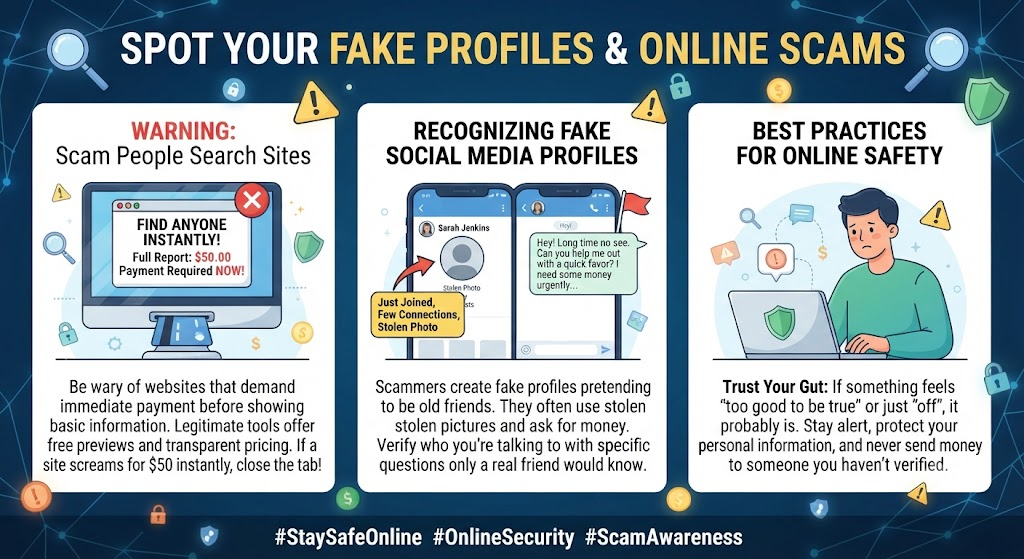
The internet is full of helpful tools, but it also has tricky traps. When using any true people search service, watch out for scam websites that promise you the moon and then ask for your credit card info. Legitimate search tools offer basic free summaries or transparent pricing. If a site pops up screaming that you must pay 50 dollars instantly to see your third-grade teacher’s phone number, close the tab immediately. Also, watch out for fake profiles on social media that use stolen pictures found through public directories. Scammers sometimes pretend to be an old classmate to gain your trust and ask for money. Always verify who you are talking to by asking specific questions that only your real friend would know. Trust your gut feeling if something feels strange or too good to be true.
Conclusion
Technology changes fast, and the way we find people online keeps evolving. Tomorrow’s true people search platforms will likely use smarter AI filters to give you faster, more accurate results while respecting privacy laws. As more governments update their public record portals to be digital-first, finding official documents becomes smoother. At the same time, privacy laws around the world are getting stricter. These new rules give everyday people more power to lock down their personal data and stop unwanted tracking. The balance between being easy to find for an old friend and staying hidden from marketers will keep shifting. Staying informed about how your data moves across the web is the best way to navigate this exciting digital future with confidence and safety.
Frequently Asked Questions
Is a true people search completely free to use?
Many platforms let you run basic searches for free to see if a name or number exists in their public records. However, deep-dive reports with full contact histories or court records often require a small fee or a monthly subscription plan.
Can someone see if I searched for their name?
Most reputable search engines keep your lookup history private. The person you are searching for will not get an alert or notification telling them that you looked up their public profile data.
How accurate are the phone and address results?
They are usually quite good if the public records are fresh. However, if someone moved last week or got a brand new prepaid cell phone, the directory might still display their older, outdated information.
What is a reverse phone lookup?
A reverse phone lookup is a feature where you type in a phone number instead of a name. The tool searches public databases to find the owner, service provider, or business tied to that specific number.
How do I remove my own info from these search sites?
You can scroll to the footer of most people-search websites and look for an opt-out or do-not-sell link. Submit the online removal request form, and the site will take down your public listing within a few business days.
Are these people search platforms legal to use?
Yes, using these tools to find personal contacts or verify public information is completely legal. They only compile records that federal, state, and local governments have already made available to the public.