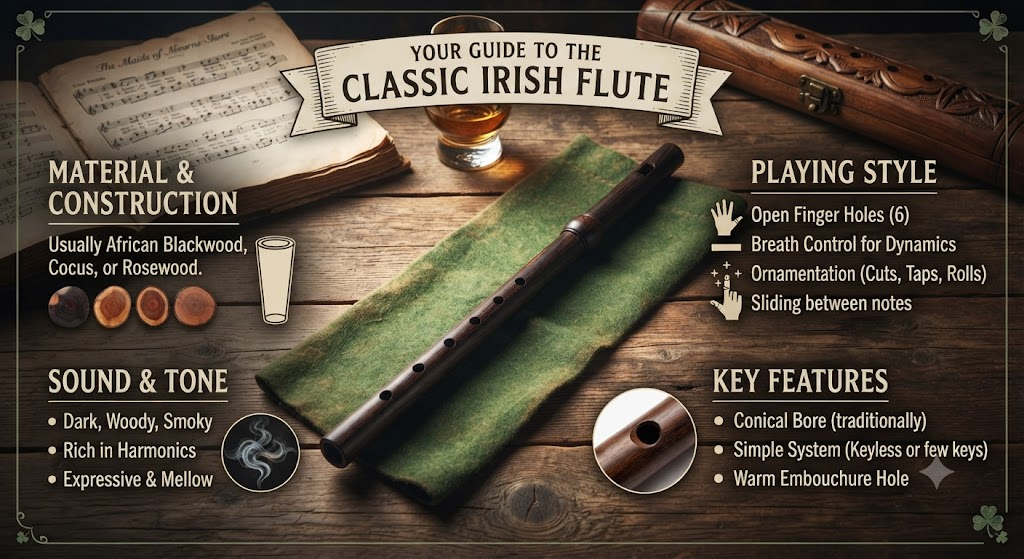
Have you ever listened to traditional Irish music and felt a deep warmth in your soul? That beautiful, woody sound usually comes from a unique instrument called the Irish Flute. It is a wonderful wind instrument that holds a special place in Celtic culture. Unlike the shiny silver flutes you see in school bands, this one is usually made of wood. It creates a dark, smoky, and magical tone that brings old folk stories to life. Whether you are a musician or just love good music, learning about this instrument is a fun journey. Let us look closely at what makes it so special and loved around the world.
I remember the very first time I heard an irish flute playing at a lively local music session. The rich sound immediately filled the room and made everyone want to tap their feet along. It is not just about playing notes on a page; it is about sharing real human feelings. This instrument lets players slide between notes and add beautiful decorations to the music. If you want to explore traditional tunes, this instrument is the perfect choice for your musical adventure. Let us dive into the details, history, and handy tips to help you understand this amazing instrument.
To help you understand this instrument quickly, I made a helpful guide with all the main details. This summary covers everything from the materials used to the unique ways people play the music. Choosing your first instrument can feel tough, but looking at these basic facts makes it much easier. Many beginners start with simple wooden models or even high-quality plastic ones to practice their finger placements. Here is a quick breakdown of what you need to know about the classic irish flute before we explore deeper.
Instrument Overview Table
| Feature | Details |
| Primary Material | African Blackwood, Boxwood, Cocus wood, or strong Polymer plastic |
| Key System | Simple system layout with open holes (can have 0 to 8 metal keys) |
| Typical Musical Key | Key of D Major is the traditional standard for folk tunes |
| Tone Quality | Warm, earthy, dark, reedy, and highly expressive |
| Finger Holes | Six main open holes covered directly by the player’s fingertips |
| Common Relatives | Traditional tin whistle and the classical silver Boehm flute |
What Exactly Is a Traditional Irish Flute?
A traditional irish flute is a wooden wind instrument used mostly in folk music. It belongs to the simple system family, which means it uses open holes instead of complex metal keys. Musicians love it because it produces a very warm, earthy, and deep sound. Most of these instruments are tuned to the key of D major, which fits traditional tunes perfectly. Players use their fingertips to cover the holes directly, giving them great control over each note. It feels very natural to hold and play once you get used to the finger spacing.
The Fascinating History of the Wooden Flute
Long ago, musicians in orchestras used simple wooden flutes before the shiny metal ones were invented. When classical players switched to modern silver flutes, they sold their old wooden instruments for cheap prices. Traditional musicians in Ireland bought these older models and changed how they were played. They realized the deep tone of the irish flute was perfect for fast dance tunes and slow ballads. Over time, this instrument became a true symbol of Irish culture and history. Today, makers still build them using those classic designs from the past.
How the Wood Choice Changes Your Sound
The type of wood used to make an irish flute changes its tone completely. African Blackwood is the most popular choice because it is very hard and creates a bright, powerful sound. Other makers use boxwood, which gives a much softer and sweeter tone that sounds lovely in small rooms. Some modern instruments are even made from strong plastic polymers, which do not crack in dry weather. If you want a traditional sound, choosing a high-quality timber model is always the best path to take.
Understanding the Simple System Design
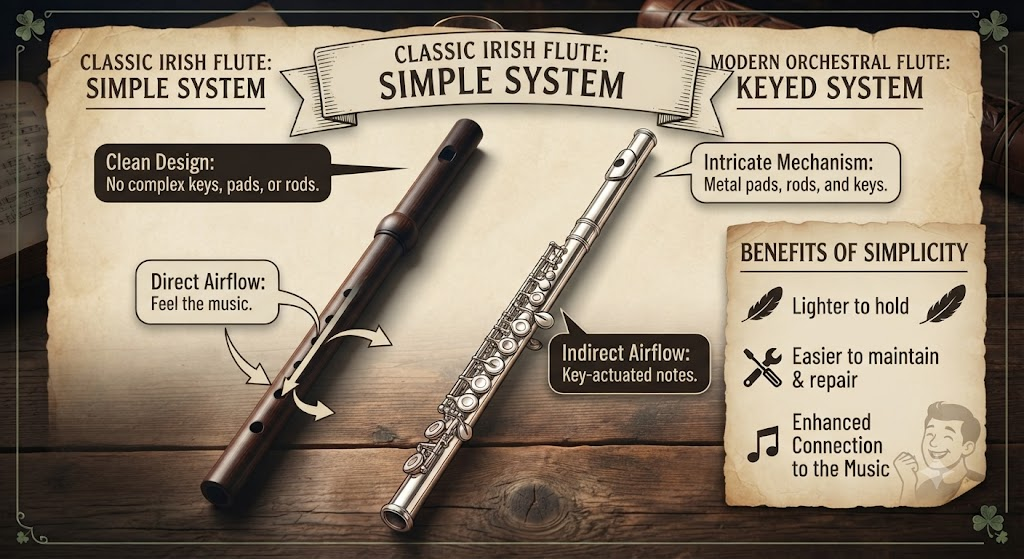
The design of the classic irish flute is different from the silver flute you see in modern schools. It does not have a complex web of metal pads, rods, and keys covering the body. Instead, it relies on a simple system of six main holes that you cover with your fingers. This clean design allows you to feel the air moving inside the instrument as you play notes. It also makes the instrument lighter to hold and much easier to fix if something goes wrong. Many players prefer this simple setup because it feels more connected to the music.
Learning the Right Embouchure and Blowing Technique
Making a good sound on a wind instrument requires the right embouchure, which is how you set your lips. To blow into the irish flute, you must shape your mouth as if you are smiling slightly. You direct a thin, strong stream of air across the blowhole rather than blowing straight into it. It takes some regular practice to find the perfect angle that creates a clean and clear note. Do not feel bad if your first few tries sound a bit breathy or quiet. With time, your lip muscles will get stronger, and your tone will become beautifully rich.
Essential Ornamentation Styles for Traditional Tunes
Traditional music sounds exciting because players use special decorations called ornamentation to spice up the tunes. When playing the irish flute, you will learn tricks like cuts, strikes, and rolls to separate notes. A cut is a very quick lift of a finger to create a bright flash of sound. A strike is the opposite, where you tap a hole quickly to create a low bounce. Mastering these fun techniques gives the music its unique Celtic bounce and lively rhythm. They help turn a simple melody into a beautiful piece of art that moves people.
The Big Difference Between Flutes and Tin Whistles
Many people start their musical journey by playing a small metal tin whistle because it is cheap and easy. While both instruments share the same basic finger placements, the irish flute requires a lot more air and lip control. The whistle has a plastic mouthpiece that guides your breath automatically to make a sound. With the larger wooden instrument, your lips must do all the hard work to shape the air stream. The sound is also much deeper, louder, and carries a lot more emotion than a small whistle.
Joining Your Very First Traditional Music Session
A music session is a casual gathering where people meet up in pubs or homes to play tunes together. Bringing your irish flute to a local session is one of the best ways to improve your skills quickly. You get to sit with other musicians, listen closely to their style, and learn new songs by ear. It is a very friendly environment where everyone supports each other and shares a love for folk music. Just remember to play softly at first while you learn the local etiquette and common melodies.
How to Properly Clean and Maintain Wood
Wooden instruments need extra love and regular care so they do not dry out and crack over time. After you finish playing your irish flute, you must always wipe the moisture out of the inside using a clean cloth. You should also apply a safe, natural oil to the wood every few months to keep it healthy. Never leave your instrument in a hot car or near a heating vent, as extreme heat ruins wood. Taking great care of your instrument ensures it will sound amazing and last for many generations.
How to Choose and Buy Your First Instrument
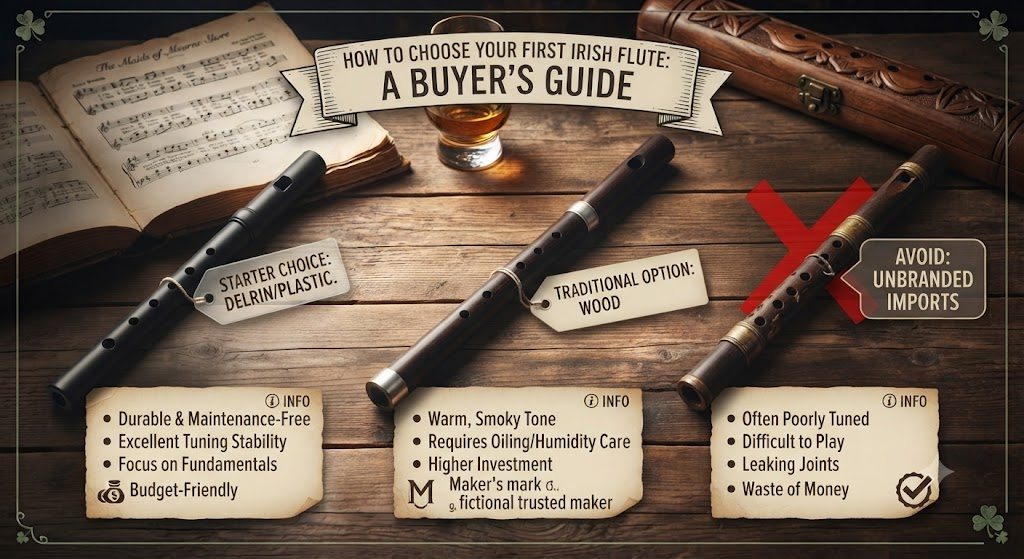
Finding the perfect starter instrument depends entirely on your budget and how much time you plan to practice. Beginners often buy a keyless irish flute made from strong plastic polymer because it requires very little maintenance. These plastic models sound surprisingly good and let you focus entirely on your fingerings and lip shapes. If you want a traditional wood model, look for trusted makers who specialize in folk instruments. Avoid cheap, unbranded instruments online, as they are often very difficult to tune and play properly.
Conclusion
Embracing the beautiful world of traditional music is a deeply rewarding path that brings endless joy to your life. The enchanting sound of the irish flute has a magical way of connecting people across countries and generations. Learning to play takes patience, but every small step of practice brings you closer to mastering its rich voice. Pick up an instrument, start listening to classic folk recordings, and let your musical creativity flow freely. You will quickly discover a wonderful community of players waiting to welcome you with open arms.
Frequently Asked Questions
Is the Irish flute hard for a complete beginner to learn?
It can be a little tricky at first because you must learn how to blow correctly to make a clear sound. However, the finger movements are very simple and match the basic tin whistle exactly. With short daily practice sessions, most beginners can play their first simple folk tune within a couple of weeks.
Why are these traditional folk flutes usually made out of wood?
Wood gives the instrument its signature dark, warm, and earthy sound that metal flutes simply cannot match. Traditional musicians prefer this organic tone because it blends beautifully with instruments like the acoustic guitar, fiddle, and accordion.
Do I need a model with metal keys to play traditional tunes?
No, you do not need keys to enjoy playing traditional music on a standard irish flute. A basic keyless model allows you to play almost all the common dance tunes easily. Keys are only helpful if you want to play complex songs in unusual musical keys.
What is the most common musical key for this instrument?
The standard choice is the key of D major because almost all traditional Irish dance tunes are written in that key. Starting with a D instrument allows you to play along with other folk musicians at local sessions without any trouble.
Can I play classical sheet music on a wooden folk flute?
Yes, you can certainly play classical melodies on your irish flute, but you might miss some sharp or flat notes. Simple system instruments are built specifically for folk scales, so classical pieces with many key changes can be tough without metal keys.
How often should I apply oil to a wooden instrument?
You should oil your instrument about once every two months, depending on how dry the air is in your home. Using a small amount of almond oil or raw linseed oil keeps the wood moisturized and prevents dangerous cracks from forming.