Have you ever wondered how your body knows when to grow, heal a cut, or fight off a cold? It all comes down to a super-cool process called cell signaling technology. Think of your body like a giant, busy city. For everything to run smoothly, the people (your cells) need to talk to each other. They don’t use phones or emails, though. Instead, they use special chemical “text messages.”
In 2026, scientists are using cell signaling technology to listen in on these secret conversations. By understanding how cells “chat,” we can find better ways to treat sicknesses like cancer or diabetes. It is like being a detective who has finally found the secret code to how life works. This technology isn’t just for labs; it’s the reason we have new medicines that help people live longer, happier lives.
What Exactly Is Cell Signaling?
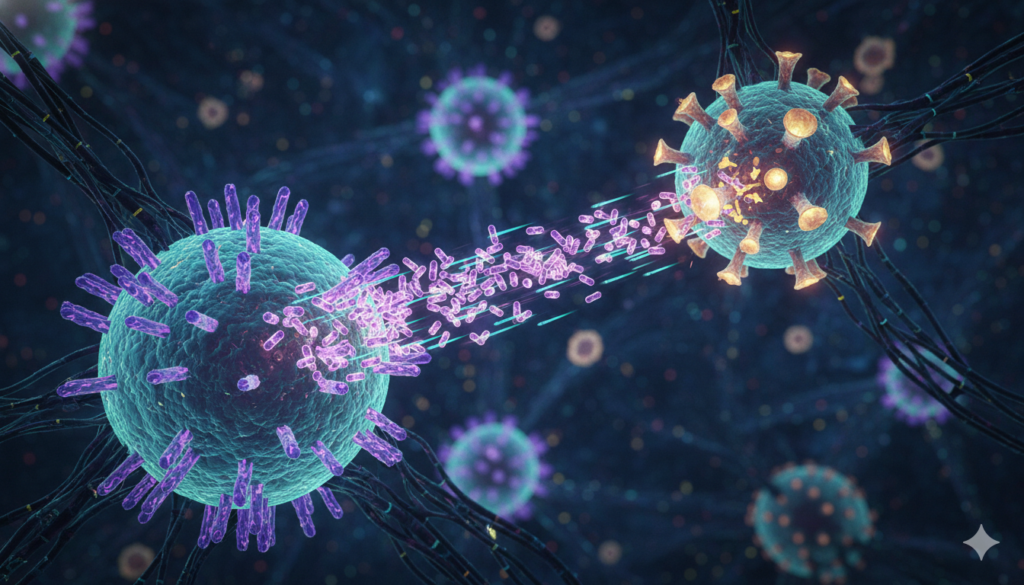
At its heart, cell signaling is just communication. Imagine you are playing a game of tag. When someone touches you, your brain gets a “signal” to start running! Cells do the same thing. They send out little molecules called ligands. These ligands travel to other cells and “knock” on their doors.
The “doors” on a cell are called receptors. When a ligand fits into a receptor—sort of like a key fitting into a lock—the cell gets a message. This is the foundation of cell signaling technology. It tells the cell to do something specific, like divide, move, or even self-destruct if it’s getting too old or sick.
The Three Simple Steps of a Cell Signal
To make things easy, scientists break down this “cell talk” into three main parts. First is reception. This is when the cell “hears” the signal because a molecule has landed on its surface. It’s like your phone ringing in your pocket. You know someone is trying to reach you!
Second is transduction. This is when the signal moves from the outside of the cell to the inside. It’s like a relay race where one runner passes a baton to the next. Finally, there is the response. This is the action the cell takes. Maybe it makes a new protein or turns a gene on or off. Cell signaling technology helps us track every single one of these baton passes.
How Cells Send Long-Distance Messages
Sometimes, cells need to talk to a neighbor right next door. Other times, they need to send a message to the other side of the body! Endocrine signaling is how your body sends “long-distance” mail. This usually involves hormones traveling through your blood. It’s like sending a letter through the post office to a friend in another state.
On the flip side, paracrine signaling is for local chat. A cell releases a signal, and only the cells nearby can hear it. Imagine whispering a secret to the person sitting next to you in class. Both of these methods are huge parts of cell signaling technology because they show us how different organs work together to keep us alive.
The Role of Receptors: The Cell’s Antennas
Cells have different “antennas” for different messages. Some receptors sit on the outside of the cell, waiting for big molecules that can’t get in. Others are tucked away inside the cell. These internal receptors wait for tiny, “oily” signals like steroids that can slip right through the cell’s “skin” or membrane.
In the world of cell signaling technology, we study these receptors very closely. If a receptor is “broken,” the cell might get the wrong message. For example, in some types of cancer, a receptor might stay “on” all the time, telling the cell to grow and grow when it shouldn’t. By making medicines that “fix” or “block” these receptors, we can help people get better.
Signal Transduction: The Indoor Relay Race
Once a signal hits the receptor, the real work begins inside the cell. This is called signal transduction. It often involves a chain reaction of proteins changing shape. One protein “pokes” the next one, which “pokes” the next one, and so on. This path is often called a signaling pathway.
One of the most famous paths is the MAPK/ERK pathway. Scientists focusing on cell signaling technology in 2026 are obsessed with this one because it controls how cells grow. If we can control the “poke” at the beginning of the chain, we can stop bad cells from growing. It’s like being able to stop a row of falling dominoes before they all hit the floor.
Why 2026 Is a Big Year for This Tech
Right now, cell signaling technology is moving faster than ever. We are using Artificial Intelligence (AI) to predict how cells will react to new drugs. Instead of spending years in a lab, computers can now simulate millions of cell “conversations” in just a few days. This helps us find cures for rare diseases much quicker.
We are also seeing a rise in single-cell analysis. This means instead of looking at a big clump of cells, we can look at just one cell at a time. It’s like being able to hear one person’s voice in a stadium full of 50,000 screaming fans. This level of detail is changing everything from how we treat the flu to how we study the brain.
Common Tools Used in the Lab
Scientists use some pretty high-tech tools to study these signals. Here is a quick look at what they use:
| Tool Name | What It Does | Why It Is Important |
| Western Blotting | Finds specific proteins | Helps see if a signal reached its target. |
| Flow Cytometry | Counts and sorts cells | Lets us see which cells are “listening.” |
| Microscopy | Takes pictures of cells | We can actually see the signals moving. |
| ELISA | Measures chemical levels | Shows exactly how much “mail” was sent. |
| Mass Spectrometry | Identifies all molecules | Gives us a full list of every signal in a cell. |
Each of these tools is a vital piece of the cell signaling technology puzzle. They allow researchers to be sure that the data they are seeing is 100% accurate before they try it in real medicine.
The Importance of “Crosstalk”
In your body, signals don’t just happen one at a time. Thousands of signals are happening at once! Sometimes, these signals “cross” each other. This is called crosstalk. It’s like having two different conversations on the phone at the same time. Sometimes it’s confusing, but usually, the cell is smart enough to handle it.
Understanding crosstalk is a major goal for cell signaling technology. If we give someone a medicine for their heart, we want to make sure it doesn’t accidentally send a “bad” signal to their stomach. By mapping out these “conversation intersections,” scientists can make safer medicines with fewer side effects.
Cell Signaling and Your Health
When cell signaling technology works right, you feel great. Your immune system catches germs, your muscles move when you want them to, and you grow at the right speed. But when signals get mixed up, it can cause problems. Autoimmune diseases happen when cells “tell” the immune system to attack the body by mistake.
By studying these mistakes, we can create “smart” therapies. Instead of a drug that affects your whole body, we can send a “coded message” that only the sick cells will hear. This is the future of cell signaling technology. It is personalized, precise, and much gentler on the patient than older treatments.

Conclusion: A World of Secret Conversations
The world of cell signaling technology is like a giant, invisible network that keeps the world of “you” running. From the second you are born to the moment you finish reading this sentence, your cells are talking, listening, and acting. As we get better at understanding this language in 2026, the possibilities for health and science are endless.
If you are curious about science, keep an eye on this field! It’s where the biggest breakthroughs are happening. Whether it’s finding a way to stop a virus or helping a heart heal itself, it all starts with one tiny signal.
Frequently Asked Questions
1. What is the main goal of cell signaling technology?
The main goal is to understand how cells communicate. By knowing how they “talk,” scientists can create better medicines and treatments for many different diseases.
2. Is cell signaling the same thing as DNA?
Not exactly. DNA is like the “instruction manual” inside the cell, while cell signaling is like the “intercom system” that tells the cell which part of the manual to read at that moment.
3. Can plants use cell signaling technology too?
Yes! While we call the study of it “technology,” plants have been using signals for millions of years. They use them to “know” when to turn toward the sun or when to drop their leaves in the fall.
4. How does AI help in cell signaling research?
AI can look at huge amounts of data very fast. It helps scientists predict how a signal will travel through a cell, which saves time and helps find cures faster than people could do alone.
5. What happens if cell signaling stops?
If cells couldn’t talk, the body couldn’t function. We wouldn’t be able to grow, move, or even think. It is essential for every single part of being alive.