




If you’ve ever researched long-term investing, you’ve likely come across the S&P 500. It is one of the most widely followed stock market indexes in the world and is often recommended for beginners and experienced investors alike. But many people still ask the same important question: how to buy S&P 500?
The S&P 500 is not a single stock you can purchase directly. Instead, it is an index made up of 500 of the largest publicly traded companies in the United States. Understanding how to buy S&P 500 means learning how to invest in financial products that track its performance.
In this in-depth guide, we’ll cover everything you need to know—from what the S&P 500 is, to step-by-step instructions on how to invest in it, strategies for long-term growth, risks to consider, and advanced tips for maximizing returns.
What Is the S&P 500 Before Learning How to Buy S&P 500?
Before understanding how to buy S&P 500, you need to understand what it represents.
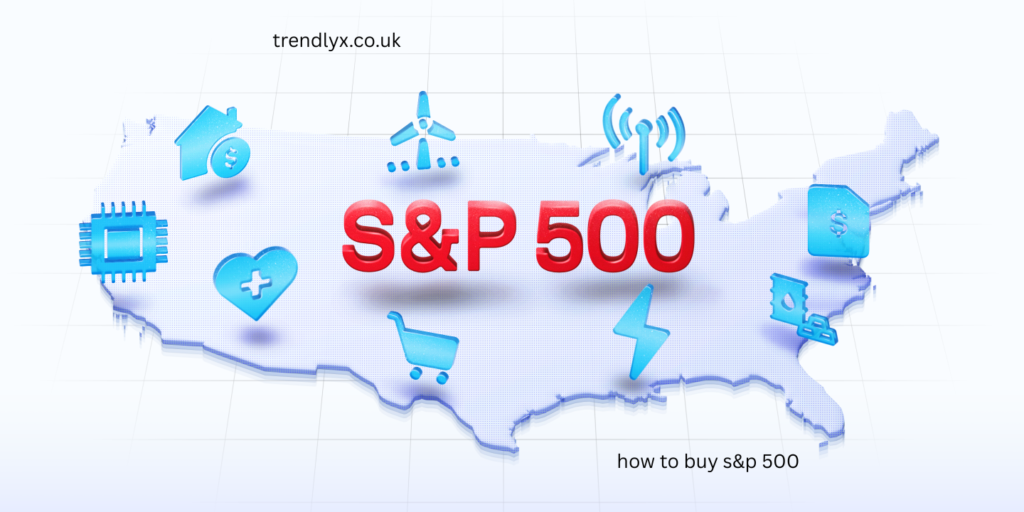
The S&P 500 (Standard & Poor’s 500) is a stock market index that tracks the performance of 500 large-cap U.S. companies. These companies span multiple industries, including technology, healthcare, finance, energy, and consumer goods.
The index is often used as a benchmark for the overall health of the U.S. stock market. When people say “the market is up,” they are often referring to the S&P 500.
Since you cannot directly buy an index, learning how to buy S&P 500 involves investing in products that mirror its performance.
Why Investors Want to Know How to Buy S&P 500
There are several reasons why investors are eager to learn how to buy S&P 500:
- Diversification across 500 companies
- Long-term historical growth
- Lower risk compared to individual stocks
- Passive investment strategy
- Strong track record of returns
Historically, the S&P 500 has delivered average annual returns of around 7–10% over long periods (after inflation adjustments). While past performance does not guarantee future results, this consistent growth makes it attractive.
How to Buy S&P 500 Through Index Funds
One of the simplest ways to understand how to buy S&P 500 is through index funds.
An index fund is a mutual fund designed to replicate the performance of a specific index—in this case, the S&P 500. These funds automatically invest in all 500 companies in proportion to their weight in the index.
Steps to Buy S&P 500 via Index Fund:
- Open a brokerage account.
- Search for an S&P 500 index fund.
- Compare expense ratios.
- Invest your desired amount.
- Hold long term.
Index funds are popular among retirement investors and long-term savers.
How to Buy S&P 500 Using ETFs
Another popular method when researching how to buy S&P 500 is investing through Exchange-Traded Funds (ETFs).
An ETF functions similarly to an index fund but trades like a stock during market hours. This offers flexibility in buying and selling throughout the day.
Advantages of ETFs:
- Lower minimum investment requirements
- Real-time pricing
- Often lower expense ratios
- Easy to trade
To buy an ETF:
- Open a brokerage account.
- Search for an S&P 500 ETF.
- Enter the ticker symbol.
- Place a buy order.
- Confirm your purchase.
How to Buy S&P 500 Step-by-Step for Beginners
If you are completely new to investing, here is a simplified breakdown of how to buy S&P 500:
Step 1: Choose a Brokerage Platform
Select a reputable brokerage with low fees and strong security.
Step 2: Open and Fund Your Account
Provide identification and deposit funds.
Step 3: Research S&P 500 Funds
Compare ETFs or index funds tracking the S&P 500.
Step 4: Decide Your Investment Amount
Start with what you can afford to invest long term.
Step 5: Place Your Order
Buy shares of the chosen ETF or index fund.
Step 6: Monitor but Don’t Overreact
Investing in the S&P 500 works best with patience.
How to Buy S&P 500 for Retirement Accounts
Many people learn how to buy S&P 500 through retirement accounts like 401(k)s or IRAs.
Retirement plans often include S&P 500 index funds as investment options. This provides tax advantages and long-term growth potential.
Benefits include:
- Tax-deferred growth
- Automatic payroll contributions
- Employer matching (if available)
How to Buy S&P 500 with a Small Budget
You do not need thousands of dollars to learn buy S&P 500. Many brokerages offer fractional shares, allowing you to invest small amounts.
Even investing $50 or $100 regularly can build wealth over time thanks to compound growth.
Consistency matters more than starting size.
How to Buy S&P 500 for Long-Term Wealth Building
The S&P 500 is often considered a long-term investment vehicle. When exploring buy S&P 500, it’s important to adopt a long-term mindset.
Long-term strategies include:
- Dollar-cost averaging
- Reinvesting dividends
- Avoiding emotional trading
- Staying invested during downturns
Historically, long-term holders have benefited from market recoveries.
Risks to Consider When Learning How to Buy S&P 500
While diversified, the S&P 500 still carries risks:
- Market volatility
- Economic recessions
- Inflation
- Geopolitical instability
Understanding these risks helps you approach buy S&P 500 responsibly.
How to Buy S&P 500 vs Buying Individual Stocks

Some investors wonder whether it’s better to buy individual stocks instead of learning buy S&P 500.
S&P 500 Advantages:
- Built-in diversification
- Lower risk
- Passive management
Individual Stocks:
- Higher potential returns
- Higher risk
- Requires research
For many investors, the S&P 500 offers a balanced approach.
How to Buy S&P 500 Internationally
If you live outside the United States, you can still learn buy S&P 500 through international brokerages offering U.S. market access.
Many global platforms allow foreign investors to purchase S&P 500 ETFs.
Be aware of:
- Currency exchange rates
- Tax implications
- Brokerage fees
How to Buy S&P 500 and Reinvest Dividends
The S&P 500 companies often pay dividends. When researching buy S&P 500, consider reinvesting dividends automatically.
Dividend reinvestment allows earnings to compound over time.
How to Buy S&P 500 During Market Crashes
Market downturns often cause fear. However, historically, downturns have been opportunities for long-term investors.
Understanding buy S&P 500 during corrections can help you accumulate shares at lower prices.
Patience is key.
How to Buy S&P 500 Safely
Safety involves:
- Using regulated brokerages
- Avoiding high-fee funds
- Diversifying beyond one asset class
- Investing only what you can afford to leave long term
Learning buy S&P 500 safely ensures financial stability.
Tax Considerations When Learning How to Buy S&P 500
Taxes depend on:
- Account type
- Dividend income
- Capital gains
Consult a financial advisor for personalized guidance.
Common Mistakes When Learning How to Buy S&P 500
Avoid these mistakes:
- Trying to time the market
- Panic selling
- Ignoring fees
- Over-investing without emergency savings
Is Learning How to Buy S&P 500 Right for You?
The S&P 500 is suitable for:
- Long-term investors
- Retirement savers
- Passive investors
- Beginners
However, it may not fit short-term traders seeking quick profits.
Final Thoughts on How to Buy S&P 500
Understanding how to buy S&P 500 is one of the most valuable steps you can take toward building long-term wealth. Whether through index funds, ETFs, or retirement accounts, investing in the S&P 500 provides diversification, historical growth, and simplicity.
The key principles are:
- Start early
- Invest consistently
- Think long term
- Stay disciplined
The S&P 500 has remained one of the most reliable investment strategies for decades. While no investment is risk-free, understanding buy S&P 500 empowers you to make informed financial decisions and participate in the growth of some of the world’s most successful companies.
